Symposium · Hong Kong
The 1st Jiangsu–Hong Kong–Macao Symposiumon Intelligent Service Robotics and Autonomous Systems
JHM-SRAS 2026 brings the robotics and computing departments of Jiangsu, Hong Kong, and Macao onto one campus for eleven days: four building robots, seven presenting what the region has learned.
Students assemble low-cost robotic arms and program them in blocks, then exhibit the working prototypes in the same hall where the papers are presented.
December 14 – 24, 2026 at The Hong Kong Polytechnic University, Hung Hom, Kowloon, Hong Kong SAR. Hybrid virtual streaming is available for remote member labs.
December 2026
11 days
Workshop · Dec 14–17
Assembly, sensors, block-based programming
Symposium · Dec 18–24
Keynotes, papers, exhibition, lab tours
At a glance
What is being proposed, in figures
Hands-on Training & Engineering Workshop
December 14 – 17, 2026
Block-based programming and custom visual interfaces remove the heavy-coding barrier, so a team can reach a working robot without first learning a text language.
Core Symposium & Cross-Border Exhibition
December 18 – 24, 2026
Keynotes, peer-reviewed presentations, the prototype exhibition, funding matchmaking, and PolyU lab tours, closing with the 2027 alliance cycle.
The programme
Build for four days, then present for seven
The exhibition is not a separate call for demonstrations. It shows the prototypes assembled in the workshop that preceded it, which is why the two components are scheduled back to back.
Day 1–2 · Assembly
Modular hardware assembly
Teams form across the three regions and build the low-cost robotic arm from modular parts. No prior hardware experience is assumed.
Day 3–4 · Software
Software deployment on pre-built simulation cores
Pre-built simulation cores are deployed to each team, and the block-based environment is connected to the arm built in the first two days.
Day 5–6 · Opening & academic tracks
Opening ceremony and Edge AI keynotes
The symposium opens with the alliance institutions on stage, followed by keynote speeches on Edge AI for service robotics.
Day 7–8 · The Tech Exhibition
Student prototype showcase opens
The exhibition floor opens to the working robotic prototypes built during the workshop. Each team demonstrates on its own hardware, not on slides.
Day 9–10 · Synergy & lab tours
Matchmaking for joint funding applications
Structured matchmaking sessions pair investigators across Jiangsu, Hong Kong, and Macao around joint-university funding calls.
Day 11 · Closing
Reflection, awards, and the 2027 cycle
Interactive reflection forums, the awards ceremony for the student prototypes, and strategic goal-setting for the 2027 alliance cycle.
Keynotes
Keynote speakers
Invited talks open the symposium half of the programme.
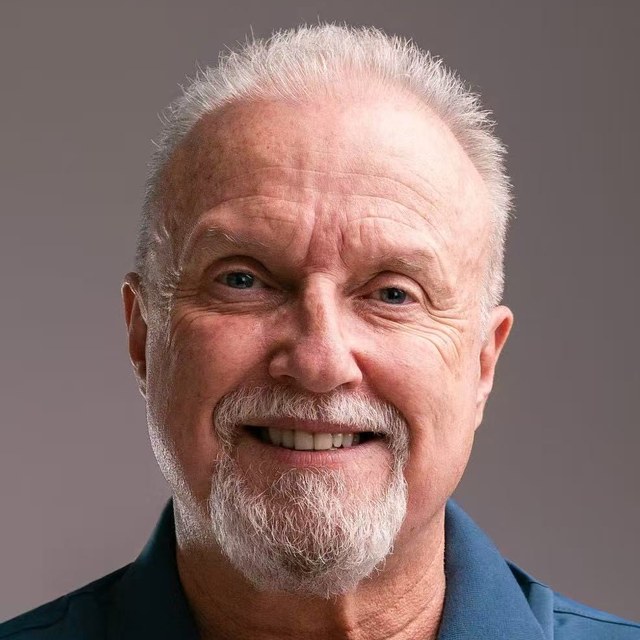
Prof. Hélio Lemes Costa
Federal University of Alfenas (UNIFAL-MG) · Brazil
Tenured Professor of Innovation, Technology, and Information Systems
His work bridges academic research with practical ecosystem development across artificial intelligence applications, radical governance frameworks, process automation, and robotics.
Prof. Hélio Lemes Costa is a Tenured Professor of Innovation, Technology, and Information Systems at the Federal University of Alfenas (UNIFAL-MG), Brazil.
He holds a PhD in Production Engineering (Innovation & Technology) from UFSCar, and master’s degrees in Media & Knowledge (UFSC) and in Innovation & Entrepreneurship (ENEB).
He acts as an instructor at the National School of Public Administration (ENAP) and serves on the board of the Porto Inovação tech park. He is also a co-founder and managing partner of NexGen Brazil Innovation Consulting Office and of agtech ventures including AgFood.ventures.
- Artificial intelligence applications
- Radical governance frameworks
- Process automation
- Robotics

Prof. Afia Mirza
KNR University of Health Sciences · India
Associate Professor
Her keynote takes the clinical side of service robotics: what a healthcare robot must get right at the bedside, where safe contact and a clean handover to a clinician outweigh raw capability.
Prof. Afia Mirza is an Associate Professor at KNR University of Health Sciences, India, and a senior consultant ophthalmologist. She holds both appointments at once: she teaches in a health-sciences faculty and she sees patients.
That practising side is why the keynote is on the programme. The robots built during the workshop are meant for service settings, and a clinician can say which of their behaviours would be accepted at a bedside and which would not — a judgement the engineering track cannot make on its own.
She also sits on the organising committee as a Co-Chair.
- Clinical ophthalmology
- Service robotics in care settings
- Safe patient contact
- Handover to a clinician
Member universities
Three regions, one alliance
Hong Kong
- The Hong Kong Polytechnic UniversityHost
- The University of Hong Kong
- The Chinese University of Hong Kong
Jiangsu Province
- Nanjing University
- Southeast University
- Liaoning Technical UniversityStrategic Regional Academic Partner
Macao
- University of Macau
- Macao University of Science and Technology
Committee
26 members, 12 places
The organising seats and the review of the papers presented on Day 6 are held by a committee assembled from outside the alliance as well as inside it.
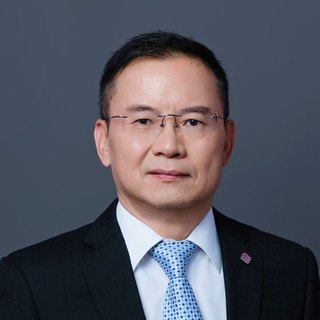
Honorary Chair
Qing Li
The Hong Kong Polytechnic University, Hong Kong
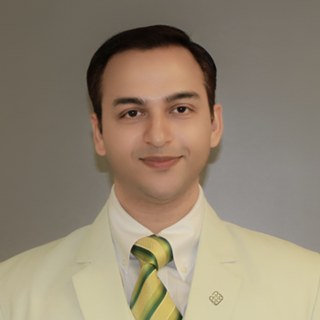
General Chair
Mohammed Aquil Mirza
Dean, Liaoning Technical University, China

General Co-Chairs
Richard Lorion
Université de la Réunion, France
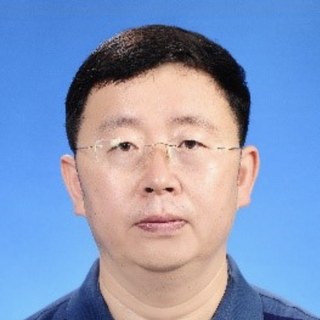
Publication Co-Chair
Cong Wu
Liaoning Technical University, China

Liaison and Publicity Chair
Raimundo Carlos Silvério Freire
Federal University of Campina Grande, Brazil
Before December
The same idea, already running in a browser
Component 1 removes the text-coding barrier: a low-cost arm, blocks instead of a language, and a check before the arm moves. HCR is a free simulator built on that idea, so a team can arrive on 14 December having already programmed one.
HCR, the Hair-Cutting Robot simulator
A five-joint arm is programmed by dragging blocks; a digital twin replays every move first and refuses anything that would reach the head. No hardware is required, and nothing has to be installed to try it.
- Block-based programming, no text language to learn first
- A twin that checks each move before the arm makes it
- Runs in the browser, and offline as a desktop app
Why an hour beforehand pays off
Teams arrive from three regions with very different course backgrounds. An hour spent on blocks before travelling means Day 1 can be spent on the hardware rather than on the programming model.
Also this season
A workshop on the same question, two weeks earlier
Members of this committee run RoboEdu@ICWL–SETE 2026 two weeks before JHM-SRAS, at a different conference. Its organising committee is drawn entirely from this one — all nineteen of its members sit here too — and it runs its own call and its own review. It is listed here because a reader interested in one is very likely to want the other.
30 November 2026 · ICWL–SETE 2026, Tenerife, Spain
The 1st International Workshop on Accessible, Embodied and Simulation-Supported Robotics Learning
A half-day academic workshop on teaching robotics with low-cost kits, block-based programming, browser simulators and digital twins — and on the evidence for what each of them actually teaches.
Organised by this committee — all nineteen of its members sit here too — two weeks before JHM-SRAS and at a different conference, with its own call and its own review. Accepted papers appear in the Springer Lecture Notes in Computer Science series alongside the ICWL–SETE 2026 post-conference proceedings; the volume has not been announced.
Papers close 30 September 2026
The workshop’s own date. Papers go through the ICWL–SETE 2026 EasyChair.
Call for papersInstitutions
An alliance activity, hosted on a Hong Kong campus













150–200 participants are expected: undergraduate and postgraduate student teams, faculty researchers, and cross-border tech innovators.